What is destination marketing + campaign tips
Visit NYC. Visit Milan. Visit Iceland. You’ve definitely seen destination marketing at work - and in the past few years, you’ve probably come across it on social media more than through any other medium.
Destination marketing is a great way to boost the travel industry in 2022 and beyond. Why? Because destination marketing isn’t selling anything, it’s simply raising awareness of a town, city, or country. And if there’s one thing we know about millennials and Generation Z (the travel sector’s next big customer), is they don’t like being sold to.
In this article, we will look at:
How destination marketing differs from other types of travel marketing
Who coordinates a destination campaign
Examples of great destination marketing campaigns
Proven strategies to market cities, regions, and countries
What is destination marketing?
Destination marketing is a marketing approach in the tourism industry. Instead of selling a product, like a hotel or a tour, destination marketing is aimed at raising awareness of a town, city, or country.
A destination marketing campaign should create intrigue as well as an emotional connection between the viewer and the destination, so that the destination is at the forefront of their minds when it comes to booking their next trip. Afterall, holidays are about memories - so the marketing campaign should offer some sense of discovery, the stories that are just waiting to be made.
The marketing campaign may include subtle CTAs directing holiday browsers to a particular brand, but it’s important that this sales tactic remains in the background otherwise it may undermine the authenticity of the campaign.
Who coordinates destination marketing campaigns?
Campaigns marketing specific destinations are usually implemented by tourism boards or destination marketing organisations (DMOs), with the aim of boosting a location’s economy and/or improving its chances of becoming a holiday destination if it wasn’t one before.
DMOs use a variety of marketing techniques, including content marketing, social media promotion, promoting a destination through influencers, and experiential marketing, for example.
Examples of destination marketing campaigns
Yes Milano
Yes Milano is a campaign created by the official promotional agency for the city of Milan, Milano&Partners. The campaign is aimed at young talent - entrepreneurs, students, tourists, and investors. We’re talking Generation Z with a few millennials thrown in there. They appeal to this audience through a coherent marketing strategy that includes vertical video formats promoted across its website, TikTok, and Instagram.
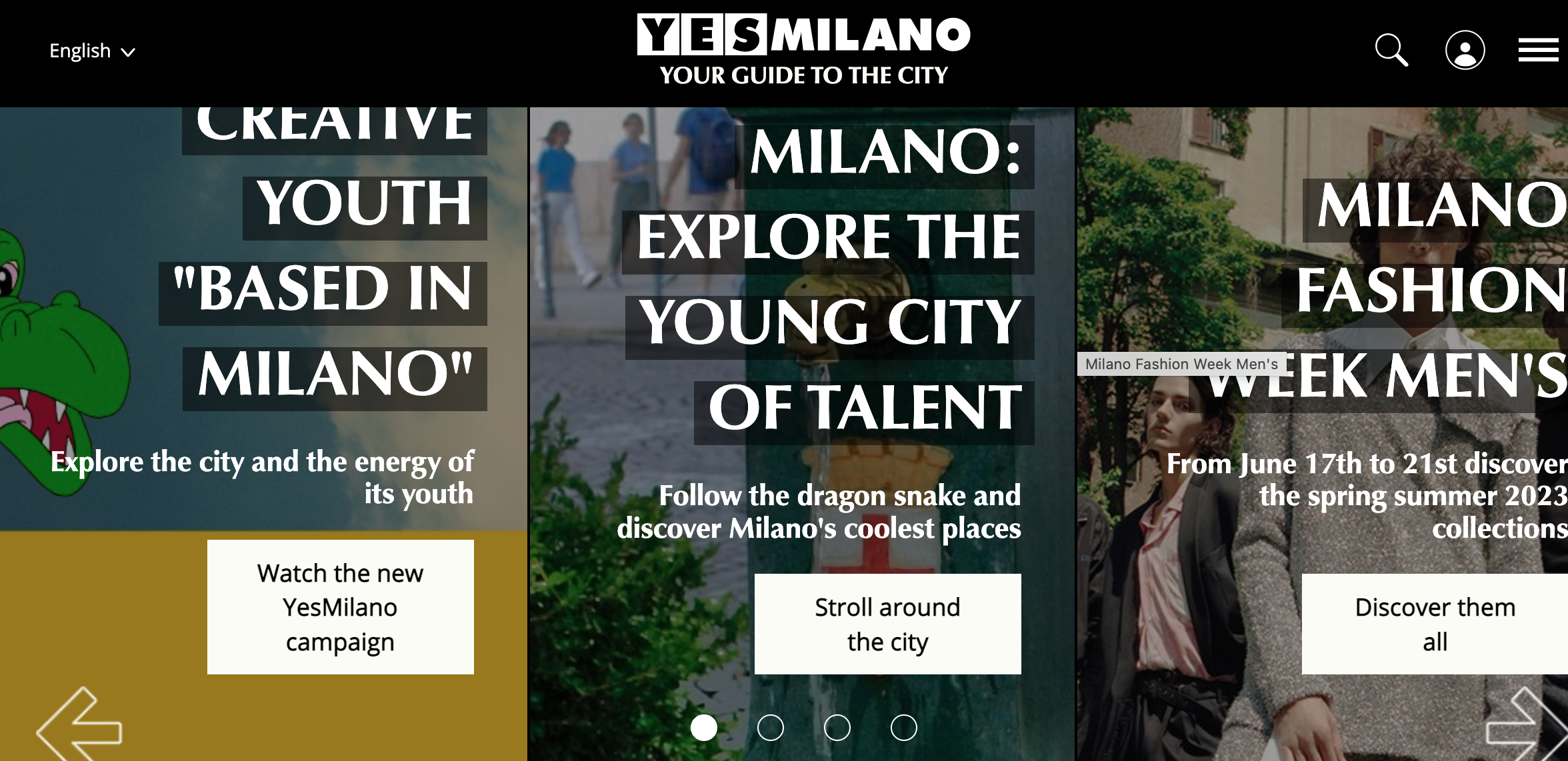
Yes Milano is a campaign aimed at young professionals, students, and entrepreneurs
Language
It is through language that brands connect with their audience. The audience here is Gen Z, and the language reflects that, adding an aspirational touch. Milan is the “Epitome of cool”, “Living and breathing creativity, style, and design every day of the year”, for example.
Choice of content
The content draws not only on what Gen Z want, such as where the skate parks are and the best areas for nightlife, but it also offers prospective Milanos/as a glimpse into the future they could have if they choose Milan.

Yes Milano’s Zine
For example, if you’re a student, you won’t be spending your time indoors; you will be studying outdoors at CityLife, with its free wifi and plug sockets.
Yes Milano also has its own digital “Zine” in manga style - a style particularly popular amongst Gen Z and millennials.
Video
Video is one of the most popular ways for DMOs to market a destination. Yes Milano’s video featuring an animated dragon is vertical in format. Now that’s no surprise considering that Gen Z consume content via their smartphones.
Importantly, there’s no pizza, pasta, and opera in this short promotional video. Instead, a Chinese-esque dragon leads you through the city. If there’s one thing Gen Z hates, it’s stereotypes. Yes Milano has done a good job of breaking with stereotypes and painting a picture (no pun intended) of a creative, young city no longer chained by tradition.
Unlike many other destination marketing campaigns, Yes Milano has a TikTok account that is reasonably successful, as well as of course a popular Instagram account.
Visit Iceland
Tourism is the main pillar of Iceland’s economy, so their destination marketing campaigns need to be on point. Their campaigns often get people talking - which is always a great result for any DMO. Skift recently placed Visit Iceland at the top of their favourite tourism websites, and it’s not hard to see why. The target market here is millennials with a sprinkling of outdoors-y Gen Zers, all of whom want a radical change of scenery from their day-to-day life.
Humour
You can’t miss the humour with the Visit Iceland campaign. The first page of the website hits you with a horse standing on a computer keyboard, with “Iceland’s wonderful horses will reply to your wonder work emails so you can enjoy all of Iceland’s other wonders. Seriously.”
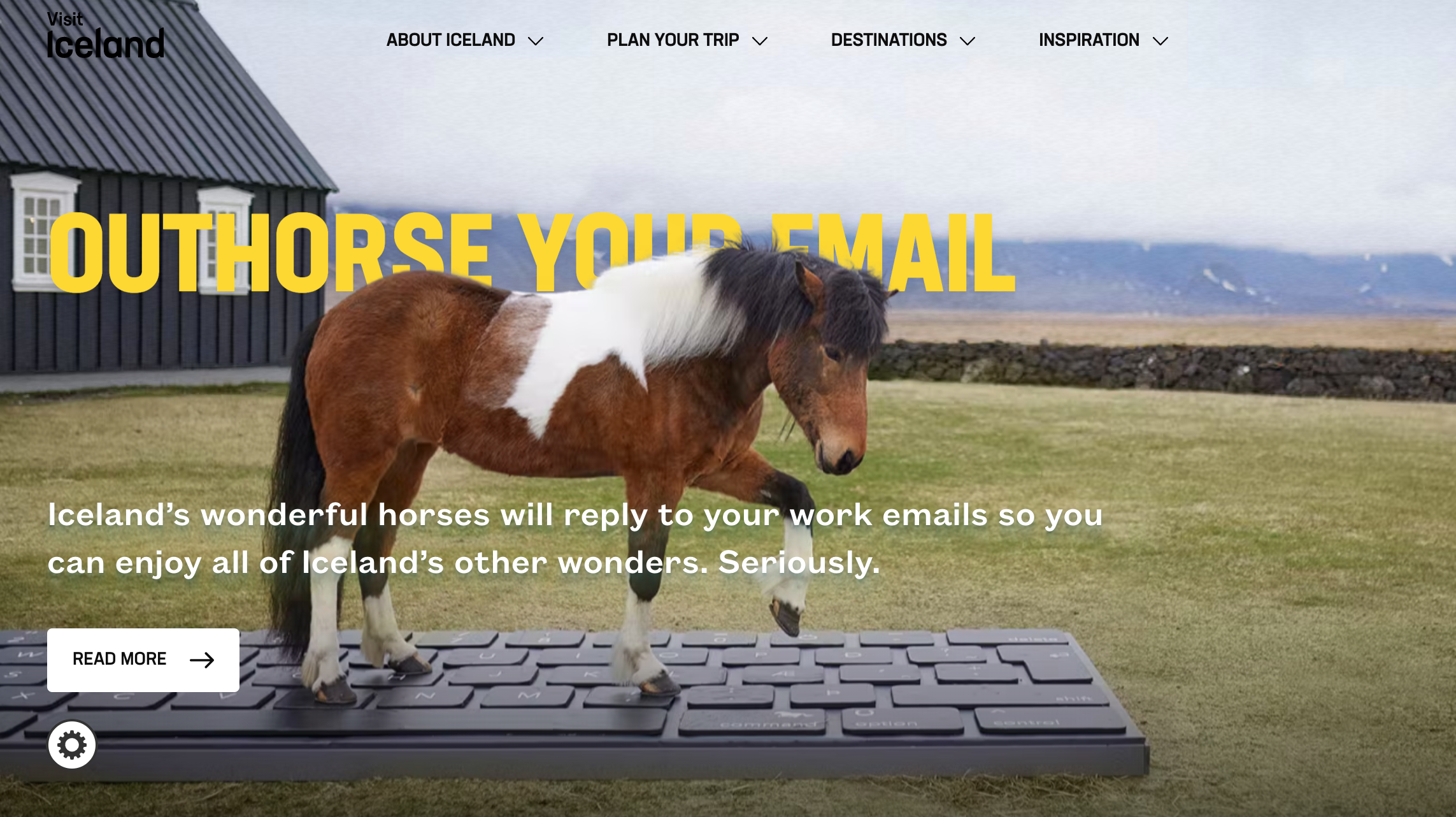
Visit Iceland website landing page
Why is this so great?
Firstly, a lot of prospective tourists are bound to be looking for holidays on a boring or bad day at work. They’re probably stressed. And they’re probably stuck either in an office or their post-pandemic office, the bedroom.
The first page immediately takes the viewer into a different universe, where they’re not working, they’re outside in nature, and they’re not taking themselves too seriously. Going to the Visit Iceland website is straight-away a positive experience.
Sustainability
Clearly the target audience for Iceland’s destination campaign are outdoors and nature enthusiasts. Just take a look at their Instagram. Almost all of their photos are of Iceland’s breathtaking countryside, often with only one or two people in the foreground, emphasising the impression of an untouched landscape. These nature enthusiasts are by default eco-conscious.
One of the first pages on the website talks about sustainability, and the landing page features a “Take the pledge” section. When you click on it, it takes you to an interactive page with simultaneously humorous and serious “pledges” about respecting the environment that you have to tick.
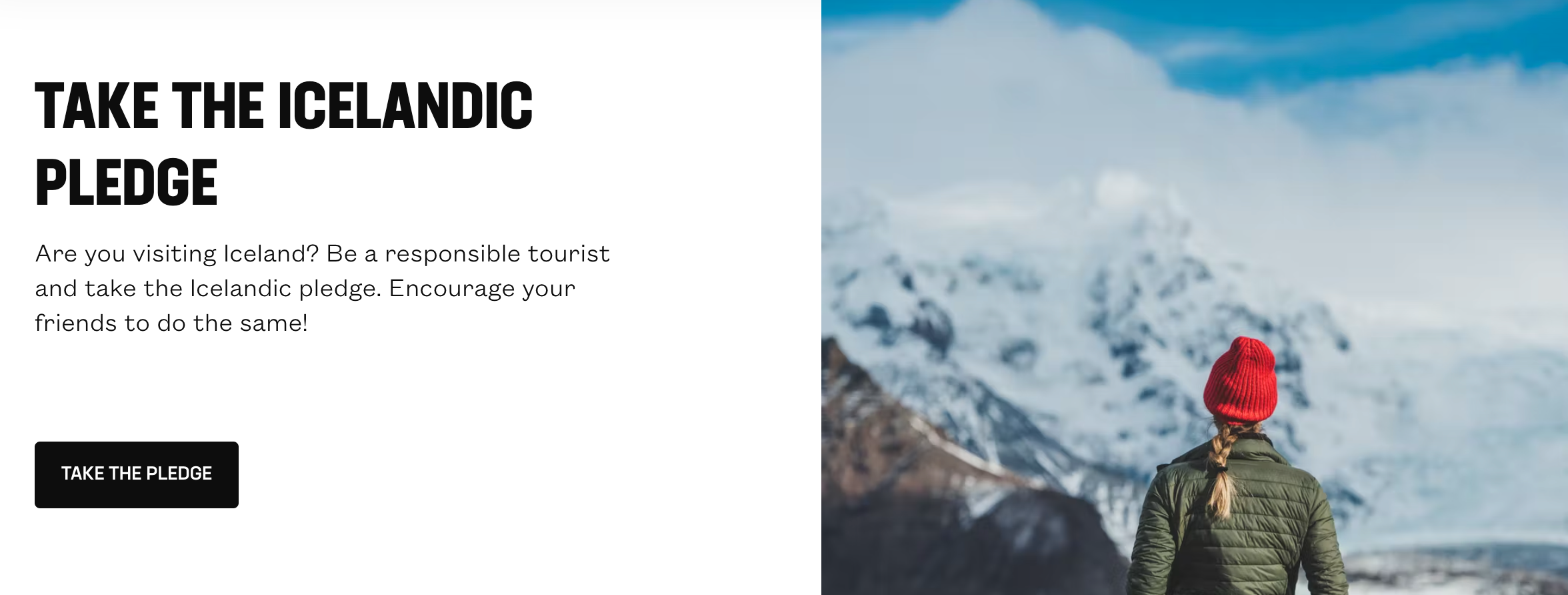
Visit Iceland’s “Icelandic Pledge”
It’s also a very simple, easy to use website, with lots of white space and straightforward navigation.
6 tips for your next destination marketing campaign
Unique selling point
Firstly, what does this location have to offer? Look at your unique selling points. Are they natural wonders (volcanoes, mountains, or lakes)? Or architectural landmarks (the Great Wall of China, the Eiffle Tower)? Or incredible food? List all the USPs you can think of, and play around with them. Perhaps, as in the Milan example above, you may want to edge away from the typical USPs like food and opera, and redefine Milan’s USPs.
If we were to put the USPs of Iceland into single words, they would be: the outdoors, nature, untouched, beauty, quirky, sustainability.
2. Target market
Make sure you know who you’re targeting, and why you’re targeting them. That will define your campaign. Are you focusing on young, Gen Z creatives? Or tired parents with young children? Or young professionals who are sick of the 9-5?
Also consider the different types of traveller - perhaps they’re students, or business travellers, or tourists. Think also about the market - it may not be a great idea to target a market in a country that has no easy flight connections to your destination.
3. Brand
Brand your destination. Now that you’ve considered your target markets and USPs, think about what your destination stands for, and how you can translate that into colour schemes, graphics, photos, logos, and language. Essentially, you want your destination to stand out from the rest and be memorable.
4. Website
Your website needs to be easy to use, and it needs to be simple. Do less, and do it better. Don’t try to market through every channel (unless you have the budget), and keep an eye on SEO in order to make your site discoverable and straightforward. Experiential marketing in particular is bound to take off this year, so create an interactive website, in-person events, live-streaming, VR and AR to truly plant your brand in peoples’ imaginations.
5. User generated content
Be careful of creating “Instagrammable” media marketing if the user generated content that results from your campaign is going to show a different picture. Authenticity is key in today’s marketing world, and people look to UGC for down-to-earth, honest representations of places. As we know, Generation Z are allergic to hard sales methods. According to CrowdRiff, 79% of people say that UGC has had a highly effective impact on their decision-making process.
6. Video
Video is one of the best ways travel marketers can immerse prospective holiday-goers in a place. It is the equivalent of a supermarket handing out free tasters of a product before they buy, and it really works. UGC video content is particularly handy, and of course, make sure to create video content that is suitable for vertical formats.
What next?
Content is key in destination marketing. Destination marketers have a whole stash of tools and techniques available to them when it comes to convincing people on the other side of a screen that their destination is the most attractive. Through language, photos, video and other digital media, DMOs can bring their destination to life - which involves a lot of research, and a lot of creativity.
If you need help with your next destination marketing campaign, check out the copywriting and travel marketing services.